Low-voltage systems for a store fit-out: five trades, with a single contractor
Network, CCTV, access control, alarm and public address for a store fit-out, coordinated with the works and handed over running, tested and documented before opening day.

A store's opening date hardly ever moves. By that day, besides the stock and the fixtures, the checkout network, the cameras, the stockroom access control, the alarm and the background music all have to be working. These are five low-voltage systems that share the same ceiling, the same rack and the same deadline.
When each one is handled by a different supplier, coordination falls to the client or the general contractor, who have other priorities. At Aiscnet we have delivered low-voltage projects for store fit-outs with all five systems under a single contract. This article sums up how we do it, as a generic case.
What usually goes wrong
Five suppliers blaming each other
The camera is not recording: is it the camera, the cable, the switch or the recorder? Each supplier checks its own part and the fault falls in between, with no one responsible.
Trades that are not coordinated with the works
The ceilings are closed before every cable is pulled. Opening them again costs time, money and a mark on the fresh paint.
Specifications nobody reads in full
The client has a technical standard: models, locations, labels, recording days. If it is only half read, the differences show up at acceptance.
Handover without documentation
The store opens, but nobody knows where each device ended up, which port serves which checkout or who has the recorder passwords.
The five systems, on one floor plan
A typical store has a sales floor, checkouts, fitting rooms, a stockroom, an office and a small technical space. The five systems are laid out over that plan:
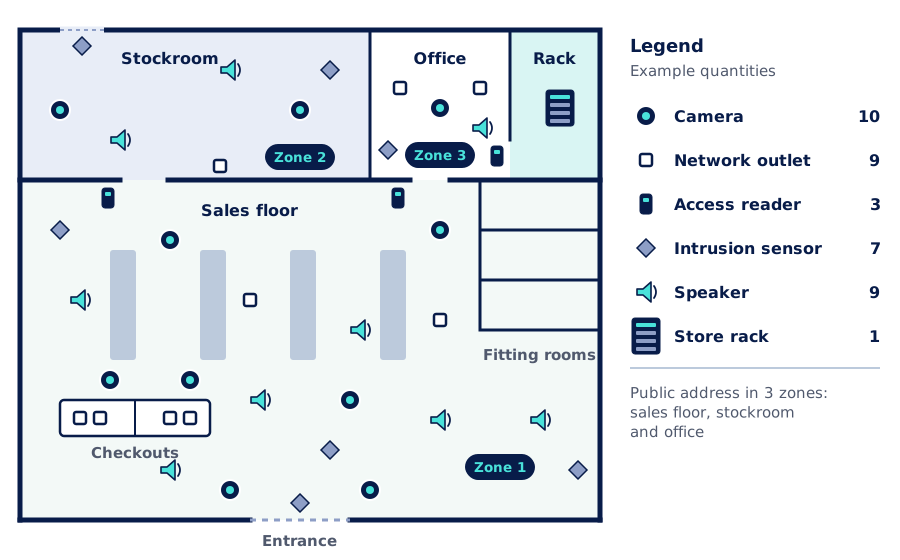
Data network
Structured cabling for checkouts, office, WiFi access points and the devices of the other systems, certified outlet by outlet.
CCTV
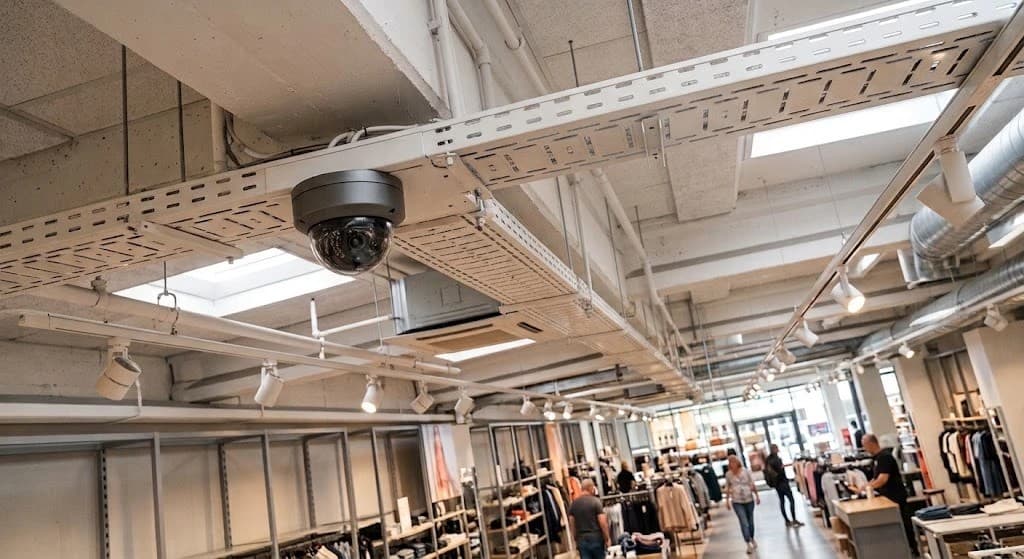
Cameras at entrances, checkouts, sales floor and stockroom, with the resolution each task requires and the retention the client defines.
Access control
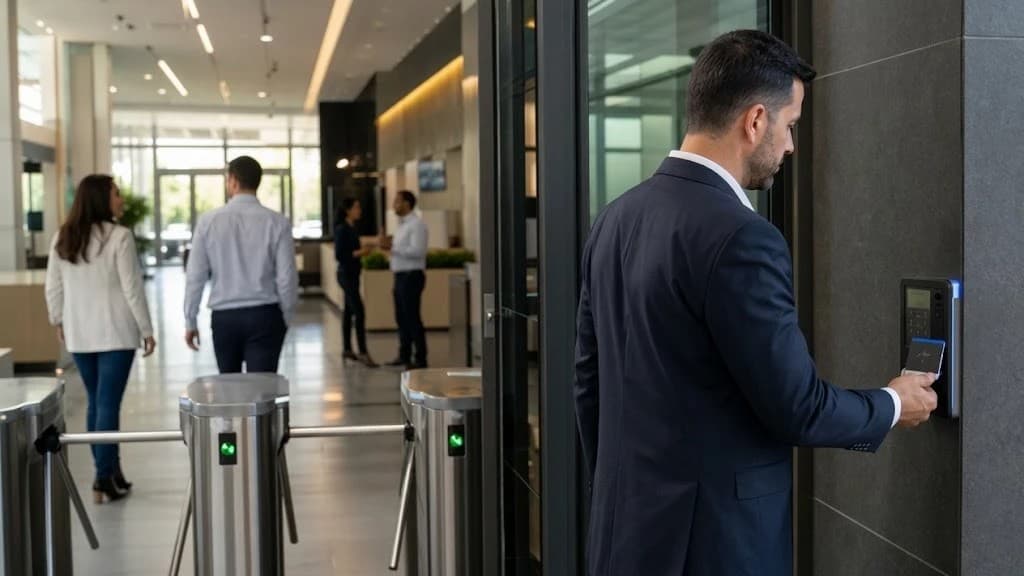
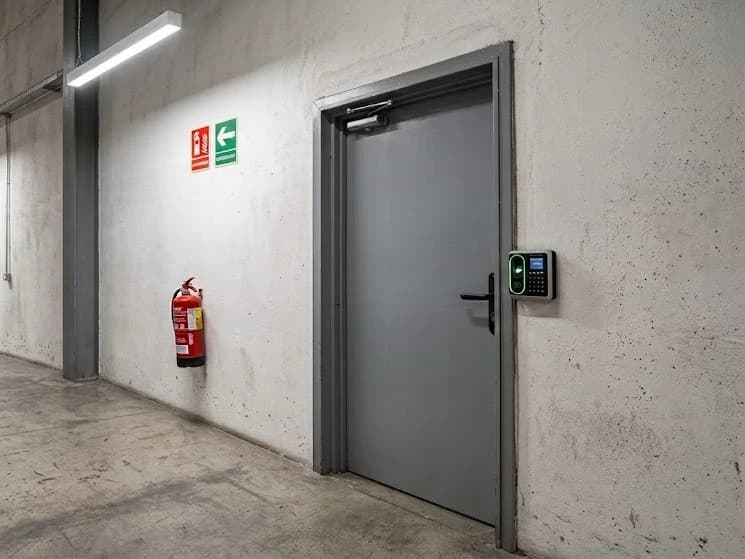
Readers at the stockroom, office and technical space, with a record of who goes in and when.
Intrusion alarm
Motion sensors, magnetic contacts on doors and shutters, panel, keypad and siren, reporting to the monitoring center the client chooses.
Public address
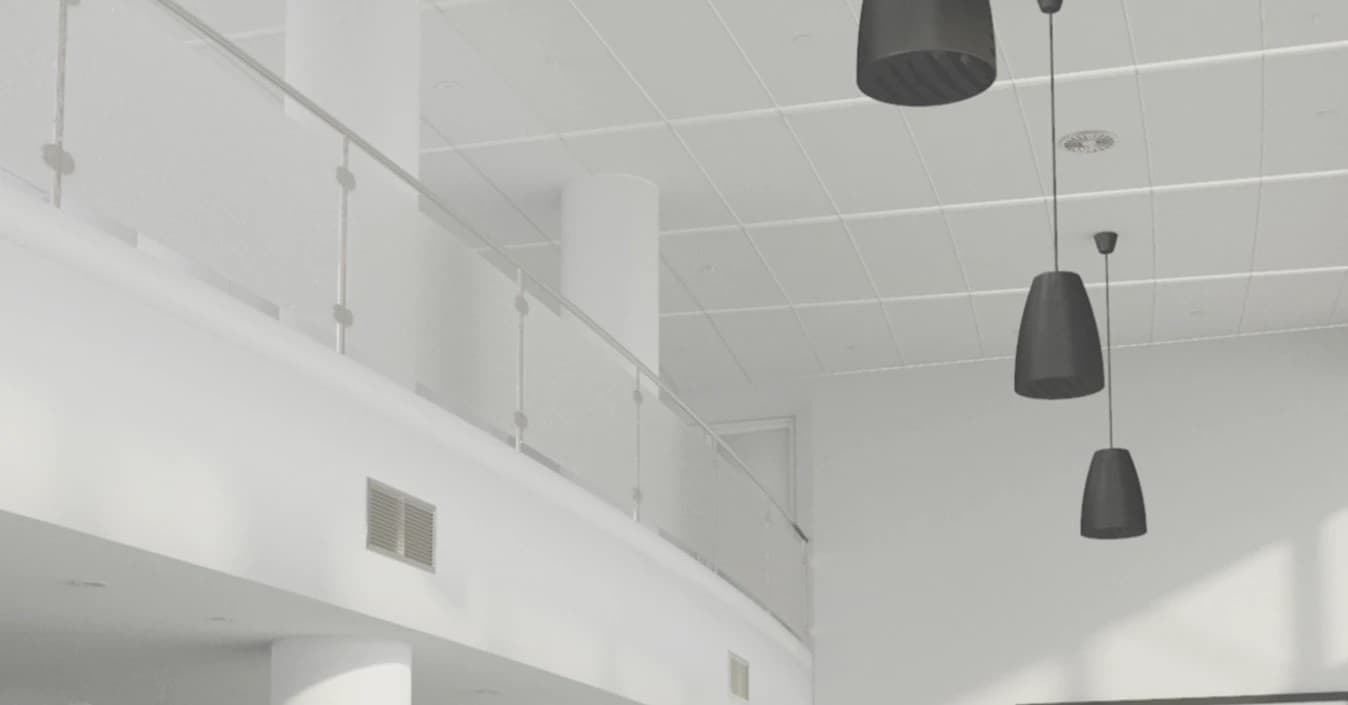
Background music and announcements by zone: sales floor, stockroom and office, each with its own volume.
One rack that ties them together
PoE switch, recorder, amplifier and UPS in a single rack, labeled and documented.
Each system has its own technical criteria. In CCTV, for example, identifying a person at the entrance takes far more resolution than detecting motion in an aisle: that is the DORI criterion in IEC 62676-4. In public address, speakers are wired on a constant-voltage line (70 or 100 V), which lets one amplifier drive many speakers and lets you set (tap) each speaker's power.
Everything comes together in the rack
The five systems look independent, but they meet in the same place. Cameras and access points are powered over PoE from the same switch; the recorder, the alarm panel and the access controller use the network; and everything depends on the same UPS. If each supplier designs its part separately, nobody adds up the total load.
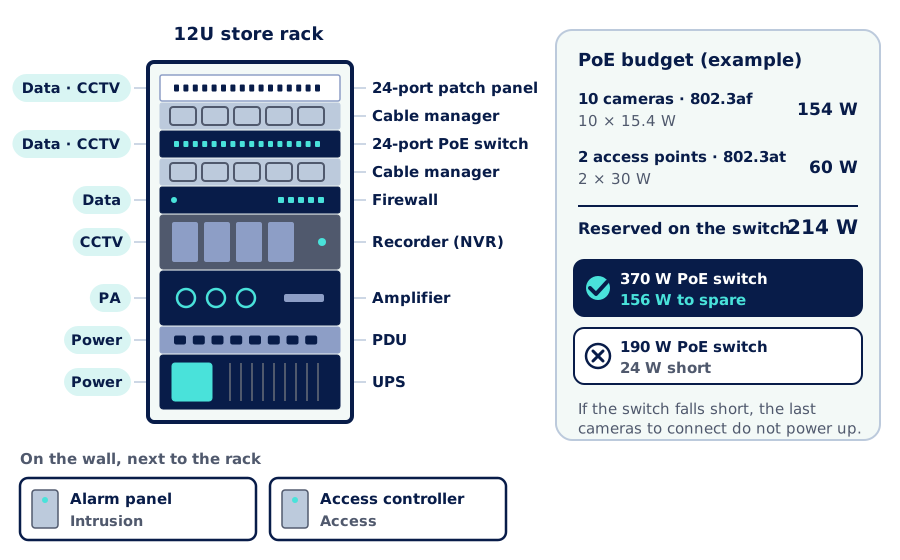
In the example, ten cameras and two access points reserve 214 W of PoE. A switch with a 370 W PoE budget powers them with room to spare; a 190 W one, whose datasheet also says "24 PoE ports", leaves the last cameras to connect without power. That kind of mistake only shows up on commissioning day if nobody did the math beforehand. The same goes for the UPS: its runtime depends on the load of the whole rack, not of a single system.
The schedule rules: coordination with the works
The most important rule is simple: everything that goes above the ceiling is done before it is closed. That is why low-voltage work is scheduled together with the construction, not after it.
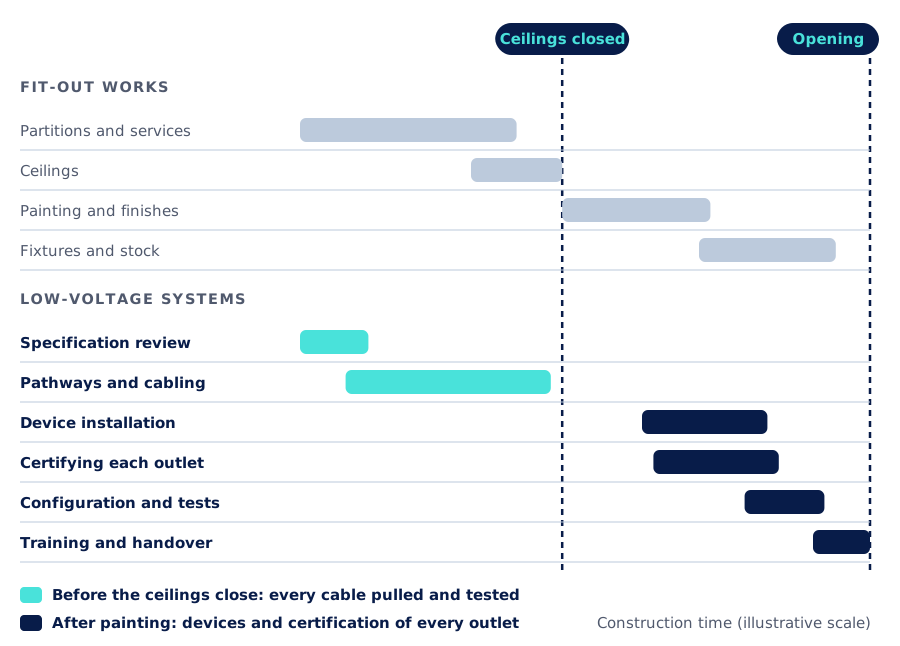
- Before the ceilings close: pathways, back boxes and cabling for all five systems, all pulled and tested.
- After painting: terminating every outlet and certifying it once it is finished, and mounting cameras, speakers, readers, sensors and rack equipment on finished surfaces.
- Before opening: configuration, integrated testing, staff training and handover of the documentation.
How we work
- 1
Assessment: a complete review of the specifications
We read the client's technical standard and the architectural drawings before quoting. Questions and discrepancies are raised in writing, not on site.
- 2
Design and a schedule coordinated with the works
We place every device and outlet, and agree with the general contractor on the milestones that affect us: partitions, ceilings, painting and store handover. Our schedule fits theirs.
- 3
Pathways and cabling before the ceilings
We pull, label and test the cabling for all five systems in a single pass, before the ceilings are closed.
- 4
Implementation
We terminate the outlets, mount the devices on finished surfaces, build the rack and configure every system to the client's standard.
- 5
Certification and integrated testing
We certify every data outlet once it is terminated, with TREND Networks certifiers. Then we test everything together: every camera records and shows up on the recorder, every PA zone plays, every sensor reports to the panel and every reader opens the right door.
- 6
Handover and support
We show the staff how to review and export a recording, arm and disarm the alarm, enroll a card and make an announcement by zone. We hand over the complete documentation and remain a single point of contact for support on all five systems.
A single contractor or five
| Five suppliers | A single contractor | |
|---|---|---|
| Coordination with the works | Five different schedules | One schedule that fits the works |
| Rack, PoE and power | Each adds up only its part | Designed for the total load |
| "The camera is not recording" | Each one checks its part | One party responsible end to end |
| Client specifications | Read piece by piece | Reviewed in full before quoting |
| Testing | System by system | Integrated, with everything running |
| Handover | Five binders or none | A single set of documentation |
General comparison between two ways of contracting; it does not refer to any specific project.
The handover documentation includes as-built drawings with the location of every device, the cabling certification reports, the list of devices with their network details, the rack diagram and photos of every system. Administrator credentials are handed to the person the client designates.
On site
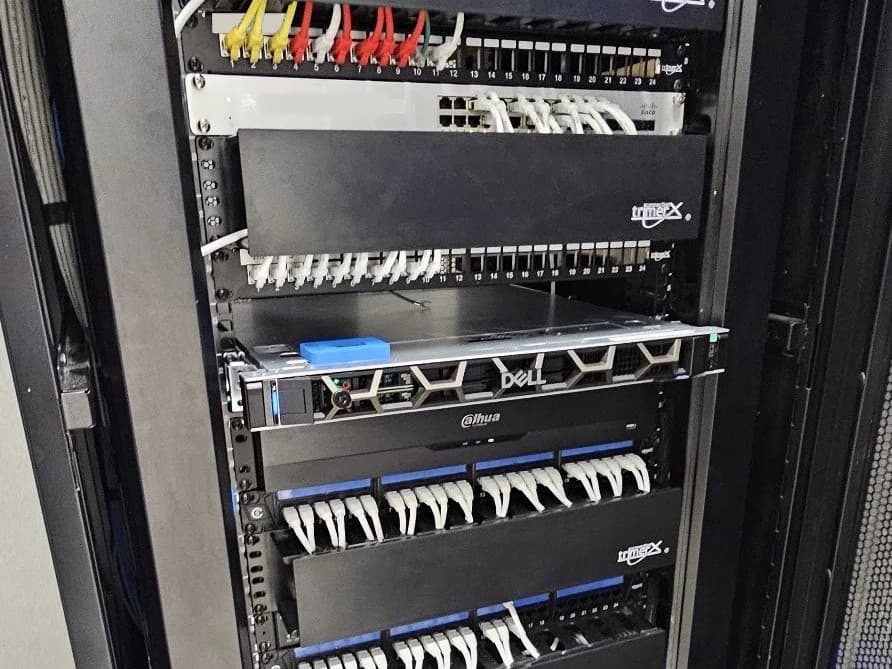
The store rack, ready for opening day
Network, cameras, public address and power in a single rack, with every port labeled and every system tested before opening. We are vendor agnostic: we work with the leading brands, such as Hikvision and ZKTeco in security, and we follow the models each client's standard requires.
Further reading
AISCNET Learning, our technical training platform, has free articles and calculators on each of these systems:
- Structured Cabling That Certifies: the physical foundation of the network.
- CCTV Sized Right: resolution, lenses and recording.
- Pro Audio: 70V, SPL & Dante: speakers, amplifiers and zones.
- PoE Without Surprises: classes, power and switch budget.
- PoE budget: add up the power of your PoE devices.
- CCTV storage: how many drives your retention needs.
- 70 V line: power and cable for a public address line.
And on this blog:
- CCTV that works: DORI, retention and storage, to define every camera.
- Access control for businesses, readers, credentials and logs.
- Zoned public address, for stores, hotels and industry.
- Site survey and project design: precise tenders with no surprises, if you are preparing the standard for your stores.
Opening a store soon?
The complete fit-out (network, CCTV, access control, intrusion and public address) is our low-voltage systems solution, part of our Network infrastructure service, backed by our Security service for CCTV, access control and intrusion, and our Audio and video service for public address.
The initial assessment is free. Tell us what you need through our contact form.
- Corrientes débiles
- Habilitación de tiendas
- CCTV
- Control de acceso
- Alarma de intrusión
- Megafonía
- Cableado estructurado
- PoE