Site survey and project design: precise tenders with no surprises
We survey the site, design to the centimeter and take off quantities with our own tools so your public or private tender states exactly what you need and what it costs.

An infrastructure project is decided long before construction: in the technical tender documents. If they say "Category 6 cabling for the building" and little else, each supplier quotes what it understands, bids cannot be compared and whatever was missing shows up during execution, when fixing it costs more.
At Aiscnet we do the groundwork: we survey the site, design to the centimeter, take off every meter of cable and pathway, and evaluate costs. That way you can call a tender, public or private, that states exactly what is needed, what it costs and how it will be accepted.
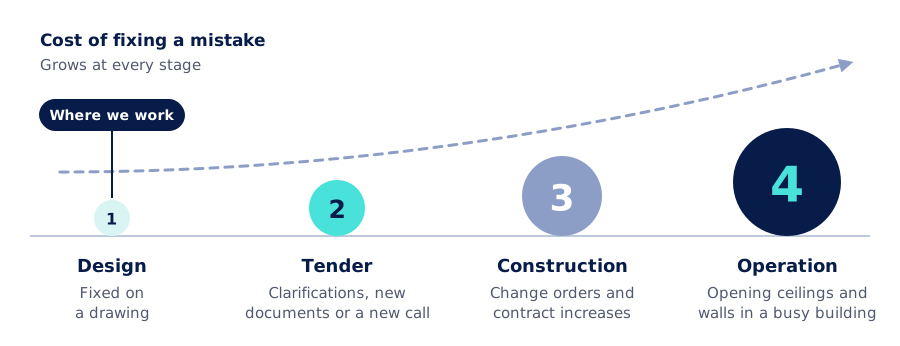
What happens when the technical specifications are vague
A Q&A forum full of questions
Bidders do not know how many outlets there are, where the pathways run or what the room includes. Clarifications extend deadlines and sometimes force changes to the tender documents.
Bids that cannot be compared
Each supplier assumes a different scope. Comparing prices is no longer fair and the technical evaluation becomes hard to justify.
A budget that does not add up
If the amount was estimated without a take-off, bids may exceed the available funds and the tender may be declared void.
Surprises during construction
Conduits with no room, meters of cable nobody counted or a room that is too small. Every omission turns into change orders, contract increases or delays.
From the site to the tender: our process
- 1
On-site survey
We walk the premises with the drawings in hand: we measure distances and heights, check pathways, rooms, power and existing outlets, and photograph everything. We also talk with the people who will use the network.
- 2
Designed to the centimeter
We place every network outlet, lay out the route of trays and conduits, and define the telecommunications rooms and racks with their space, power and cooling.
- 3
Take-off with our own tools
We calculate the length of every outlet, the boxes of cable, the fill of every pathway, the rack units and the accessories.
- 4
Technical validation and cost evaluation
We check the design against cabling standards and the project requirements, and estimate the cost of every line item with current market prices.
- 5
Technical specifications ready to tender
We deliver technical specifications, an itemized bill of quantities, drawings and the certification, warranty and handover documentation requirements.
Designed to the centimeter
A drawing that only marks outlets is not enough to put out to tender. We design the actual route of every cable: which tray it runs along, where it branches off, how far it drops down the wall and how much slack is left in the room and at the outlet. With those measurements we know the length of every outlet and check that none exceeds the 90 meters allowed for the permanent link.
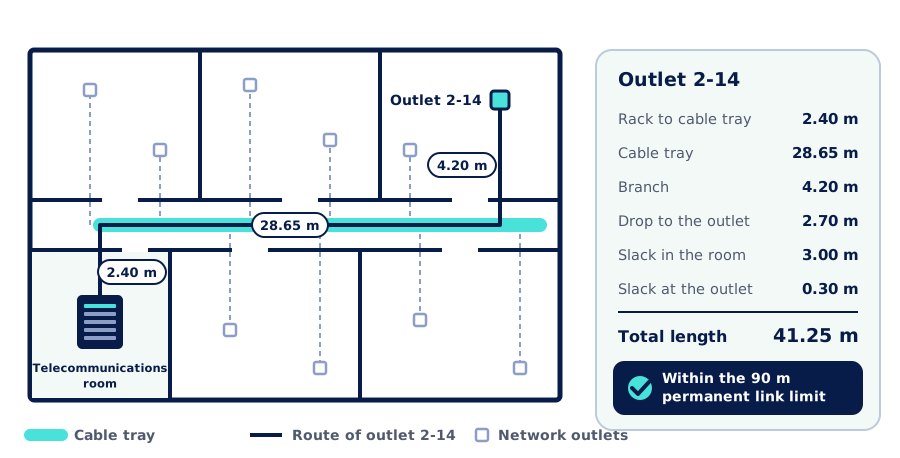
The same level of detail applies to everything around the cable:
- Pathways. Type and size of every tray or conduit based on the cables it will carry, with room to grow. A full conduit prevents adding outlets later.
- Telecommunications rooms. Location, floor space, power, cooling and grounding.
- Racks. A diagram of every rack with its occupied units: patch panels, cable managers, switches, UPS and free space.
- Fiber optics. Route, fiber count and loss budget of every link between rooms or buildings.
Take-off: every meter counts
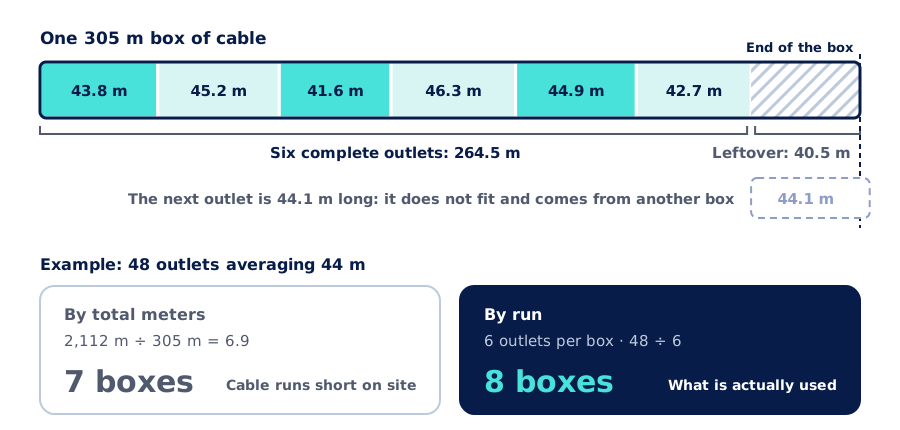
A take-off translates the design into quantities. We do it with tools we developed for structured cabling and infrastructure, which calculate outlet by outlet instead of using averages.
A simple example shows why it matters. Cable is bought in 305 meter boxes and horizontal cabling does not allow splices: every outlet has to come whole from a single box. Dividing the total meters by 305 falls short.
Some of the calculators we use are available for free on AISCNET Learning, our technical training platform:
- Conduit and tray fill: how many cables fit in each conduit.
- TIA-568 cabling channel: whether a run meets the 100 meter limit.
- Rack capacity: how many units the equipment in a room takes up.
- Heat load: how much heat the equipment gives off and what cooling it needs.
Collaborative online documentation
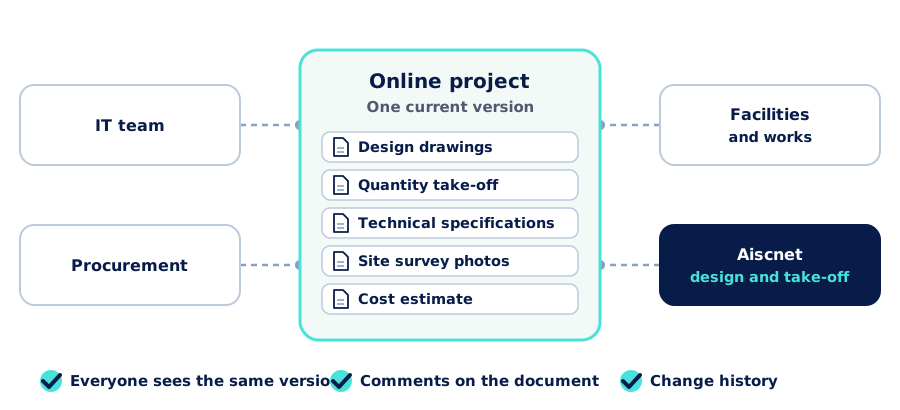
During design, your team and ours work on the same online documents: drawings, take-off, specifications, survey photos and budget. Comments from IT, procurement or facilities are resolved in the same place, and nobody works on an outdated version.
What changes in your tender
| Tender without prior design | Tender with survey and design | |
|---|---|---|
| Quantities | Estimated or lump sum | Taken off outlet by outlet |
| Pathways | Described in general terms | Route, type and fill per section |
| Rooms and racks | Left to each bidder | Location, size and diagram of every rack |
| Budget | Uncertain reference | Estimated cost per line item |
| Bids | Hard to compare | Comparable item by item |
| Execution | Change orders and delays | What was tendered is what gets built |
General comparison between two ways of preparing a tender; it does not refer to any specific process.
Public and private tenders
Public tenders
We specialize in Mercado Público, Chile's public procurement system: we have experience in public tenders as bidders and are registered in ChileProveedores, the government supplier registry. We prepare technical specifications built around how a public tender is published, questioned and evaluated.
Private tenders
For companies that call a tender or request quotes from several suppliers: with the same design and the same bill of quantities, every proposal is compared on the same basis.
In both cases we know what information a supplier needs to quote properly, and that is exactly what we put in writing in the tender documents. We help you define:
Scope
What the project includes and what it does not, per site and per phase.
Technical specifications
Cabling category, pathway type, room and rack equipment, and applicable standards.
Itemized bill of quantities
One schedule of line items so that every bidder quotes the same thing.
Acceptance requirements
Certification of every outlet, manufacturer warranty, labeling and as-built documentation.
Verifiable requirements
Concrete technical requirements that are easy to check when evaluating bids.
Realistic timelines
Execution times that match the size of the works and the operation of the premises.
Count on us to define your project
Tell us what you need through our contact form or learn more about our network infrastructure and structured cabling service.
- Licitaciones públicas
- Licitaciones privadas
- Mercado Público
- ChileProveedores
- Relevamiento
- Cubicación
- Cableado estructurado