Zoned PA systems for stores, hotels and industrial sites
Music and announcements at the right level in every space. How we design a zoned PA system, why 100 V lines are used and how amplifier headroom is calculated, with examples.
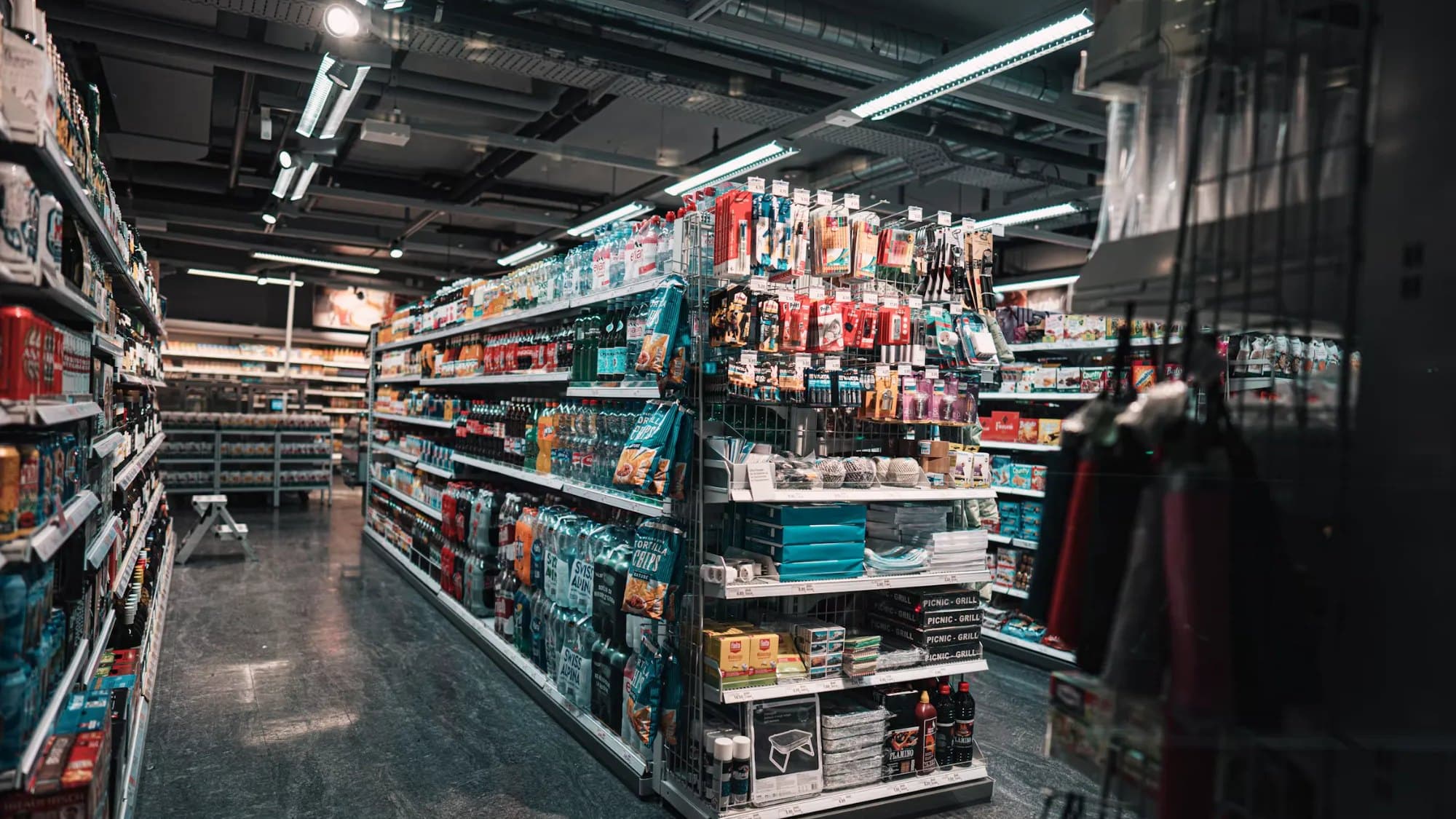
In the store, the same music plays on the sales floor, at the checkouts and in the stockroom. On the floor it is fine; at the checkouts it drowns out the customer, and in the stockroom nobody hears that help is needed at the registers. Someone turns up the master volume and the problem just moves somewhere else.
Zoned PA solves that: every space with its own content, volume and schedule, and announcements that are heard, and understood, where they need to be. It works the same for a store, a hotel or an industrial plant.
Problems we solve
Loud music in one zone, nothing in another
Speakers were installed where there was ceiling space, not where they were needed. Some corners boom and others are silent.
Announcements nobody understands
You can hear someone talking, but not what they say. The announcement is repeated three times and the customer still does not know which register to go to.
One volume for everything
The restaurant wants louder music at night, the front desk wants it low all day and the guest-room hallway does not want it at all.
An amplifier that overheats or shuts down
Speakers were added without calculating the load. It runs at the limit, overheats and goes into protection at the worst moment.
Expansions that cannot be done
A new area opens and there is no power, no channels and no record of which speaker hangs off which line.
Nobody knows where each cable goes
With no drawings or labels, every fault means crawling through ceilings to find a shorted line.
Zones: every space with its own audio
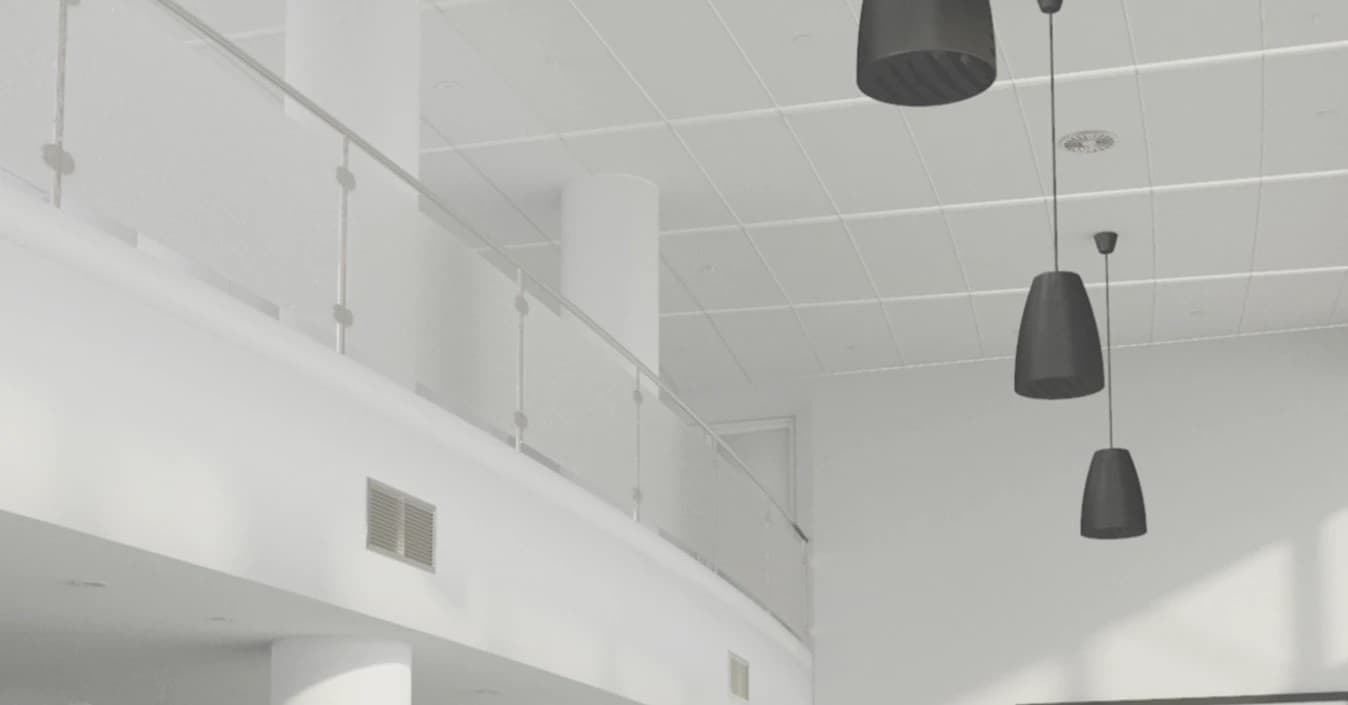
A zone is a group of speakers that always plays together: the lobby, the restaurant, the checkouts, the stockroom. Each one has its own speaker line and amplifier output, and an audio matrix decides what plays in each zone and how loud.
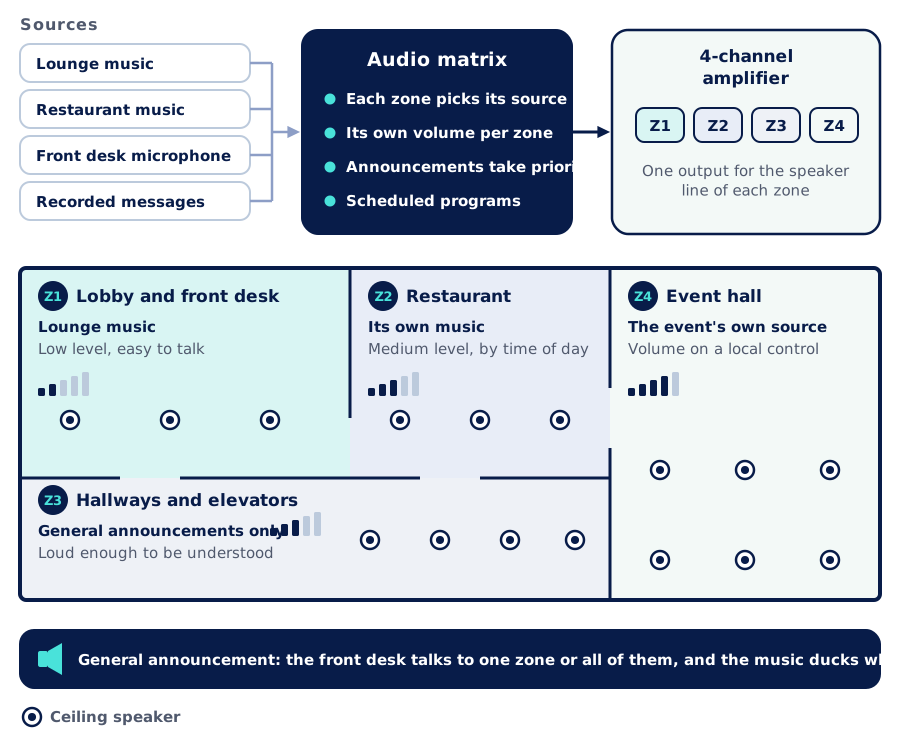
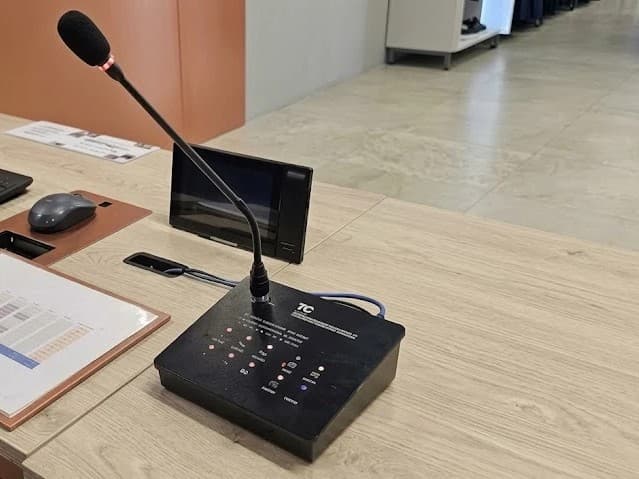
The matrix also gives announcements priority: when the front desk talks to one zone, or all of them, the music ducks by itself and comes back afterwards. It also handles schedules: calmer music in the morning, another playlist in the afternoon, silence in the hallways at night.
Zones change with the venue. A store or an industrial plant could look like this:
| Zone | What plays | Level | Speakers |
|---|---|---|---|
| Store · sales floor | Music and announcements | Medium, above the customer buzz | Ceiling, evenly spread |
| Store · checkouts | Announcements and quieter music | Low, so staff can serve | Ceiling, above the lines |
| Store · stockroom | Announcements only | High, above the work noise | Wall-mount or horns |
| Plant · production | Announcements and calls | About 10 dB above background noise | High-efficiency horns |
| Plant · offices and canteen | Soft music and announcements | Low | Ceiling |
Illustrative example; levels and speaker counts are defined by measuring the noise in each space.
Announcements people understand
An announcement is understood when it arrives clearly and loud enough above the noise of the place. As a rule of thumb, the voice should be about 10 dB above the background noise: if the checkouts sit at 65 dB(A), the announcement should reach about 75 dB(A).
Rather than turning up the volume, it helps to have more speakers at lower power, evenly spread: everyone hears one nearby instead of a loud, distant one bouncing off every wall. Intelligibility can also be measured: the STI index (IEC 60268-16) runs from 0 to 1, and 0.5 or more is commonly required for announcements.
If the system must also serve for voice evacuation, there are additional requirements from fire detection and alarm standards (for example the EN 54 series or NFPA 72), which are defined together with the fire protection project.
100 V line: many speakers and long runs
A store or a hotel may have dozens of speakers per zone, fifty meters or more from the amplifier. With low-impedance speakers (4 or 8 Ω), each output takes only a few speakers and the current is high, so a significant share of the power stays in the cable.
Commercial PA uses constant-voltage lines, 100 V or 70 V depending on the equipment. Each speaker has a small transformer with taps (for example 1.5, 3 or 6 W) that sets how much power it draws from the line. Current drops, losses almost disappear and dozens of speakers can be connected in parallel.
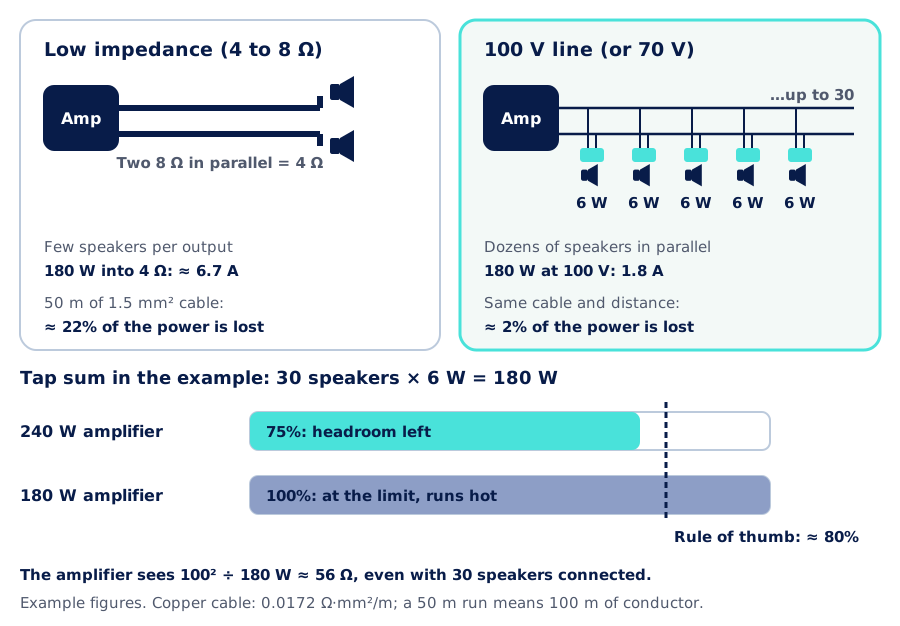
Example: a 30-speaker zone
- Tap sum. 30 ceiling speakers on the 6 W tap add up to 180 W.
- Headroom. With a 240 W amplifier, the load is 75%. A common rule of thumb is not to exceed 80% of the amplifier's power: it leaves room for heat and for growth.
- Impedance. The amplifier sees 100² ÷ 180 W ≈ 56 Ω: a light load, even with 30 speakers connected.
- Expansion. If 4 more speakers are added tomorrow, the load reaches 204 W: 85% of the amplifier, above the rule. Some speakers can move to the 3 W tap, or the expansion can go to a spare channel.
That is why we document the taps on every line and leave spare channels for growth: the next expansion is calculated on a spreadsheet, not by trial and error.
Audio over IP for large buildings
In large buildings or sites with several equipment rooms, audio can travel over the data network with protocols such as Dante: music and announcements reach amplifiers on each floor or area, and zones can be reorganized in software without pulling new cable. The network has to be ready for it, with audio traffic kept separate and prioritized.
Our process
- 1
Assessment and survey
We walk the site with the drawings: zones, uses, schedules, ceiling heights, noise in each space and existing equipment.
- 2
Design
We define zones, speaker type and placement, taps per line, amplification with headroom and pathways.
- 3
Implementation
We install in phases, coordinated with the operation of the store, hotel or plant so it is not interrupted.
- 4
Testing and commissioning
We set the level of each zone, announcement priority and schedules, and test with the venue in operation.
- 5
Documentation
We hand over the zone plan, the taps on each line and the labeled amplifier outputs.
- 6
Support
We remain available for support and for the expansions to come.
What you get
The right volume in every zone
Every space with its own content and level, no fighting over the knob.
Announcements people understand
To one zone or all of them, with priority over the music.
Amplification with headroom
Calculated load, equipment that does not run at the limit.
Automatic schedules
Music changes by itself according to the time and day.
Planned growth
Documented taps and spare channels for the next zone.
Part of the whole
When fitting out a store, the PA is coordinated with the network, CCTV and access control.
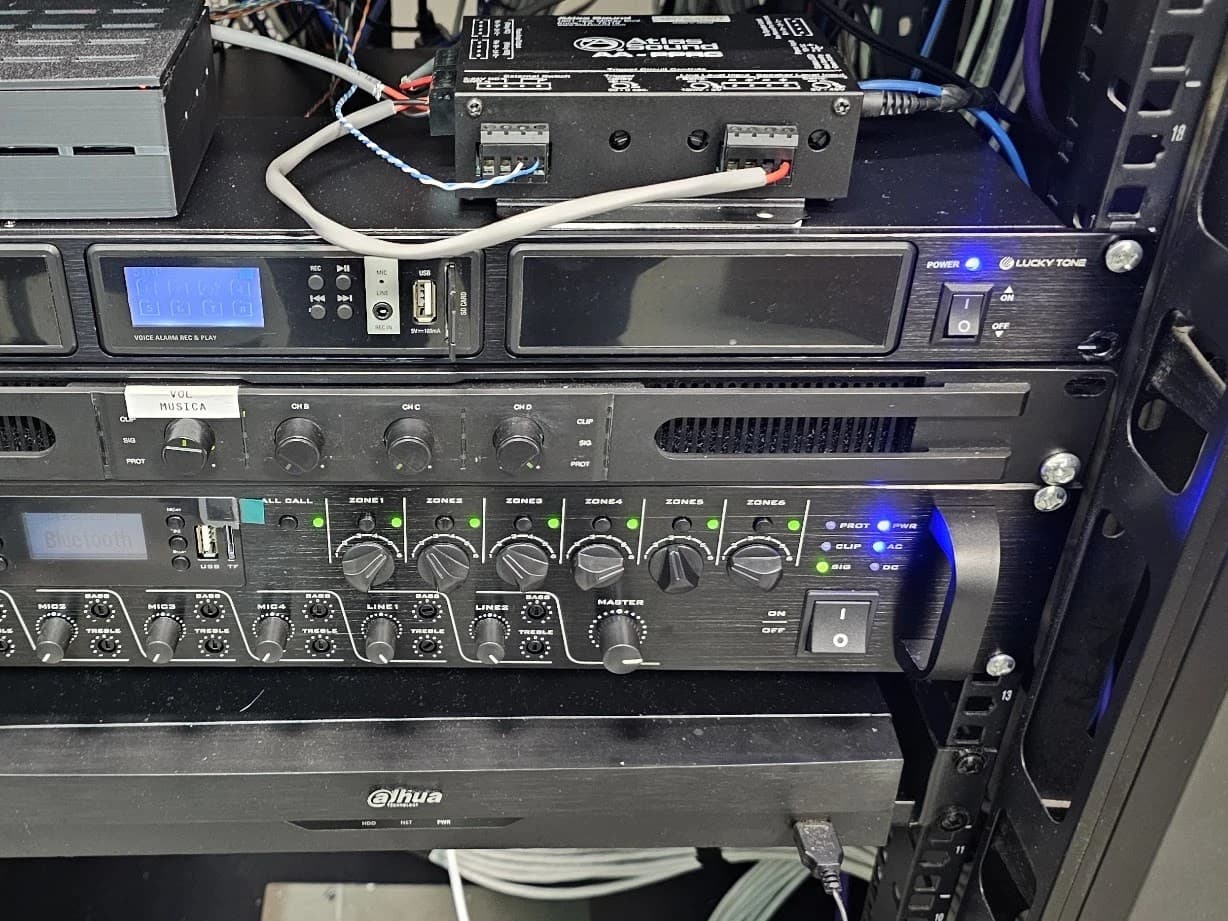
Everything labeled, everything documented
Every zone has its own volume control, every amplifier output carries the name of its zone and every line its tap sum on the drawing. When something fails, you know what to check without opening ceilings. The same documentation is the basis for expanding: a new zone is calculated before buying a single speaker.
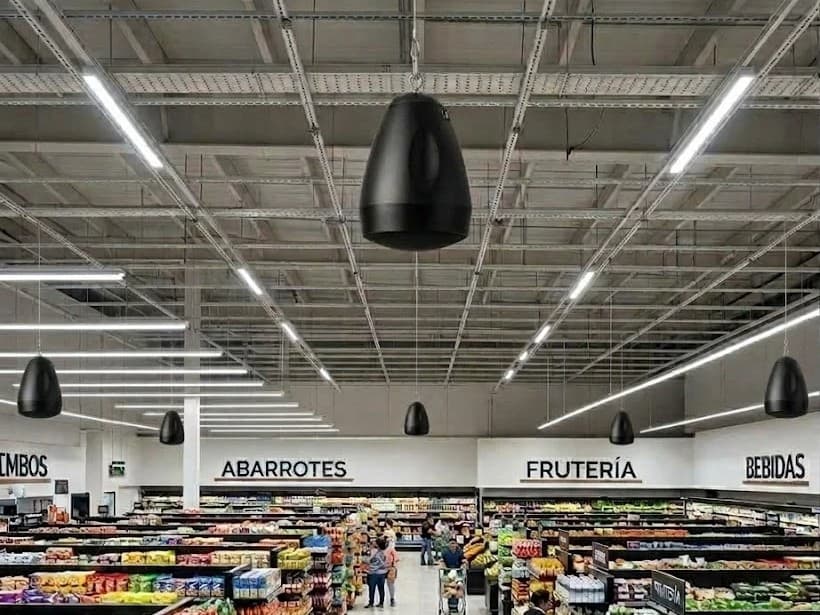
Further reading
On AISCNET Learning, our technical training platform, you will find free articles and calculators on these topics:
- Pro Audio: 70V, SPL & Dante: why constant-voltage lines rule commercial audio.
- Decibels Without Drama: what it means for an announcement to sit 10 dB above the noise.
- 70V / 100V Line: add up the taps on a line and compute the amplifier load and headroom.
- Speaker SPL: the level that reaches a given distance from sensitivity and power.
- Speaker Impedance: low-impedance series and parallel combinations.
- Audio-over-IP (Dante): how much network bandwidth audio uses.
On this blog:
- Low-voltage systems for a store fit-out: network, CCTV, access control, intrusion and PA in a single project.
- WiFi for large hotels: how we design a hotel network.
- Video conference rooms that work the first time: camera, microphones and display by room size.
Tell us what you need through our contact form or learn more about our audio, video and web service.
- Megafonía
- Audio profesional
- Línea de 100 V
- Música ambiental
- Avisos
- Hotelería
- Retail
- Dante